
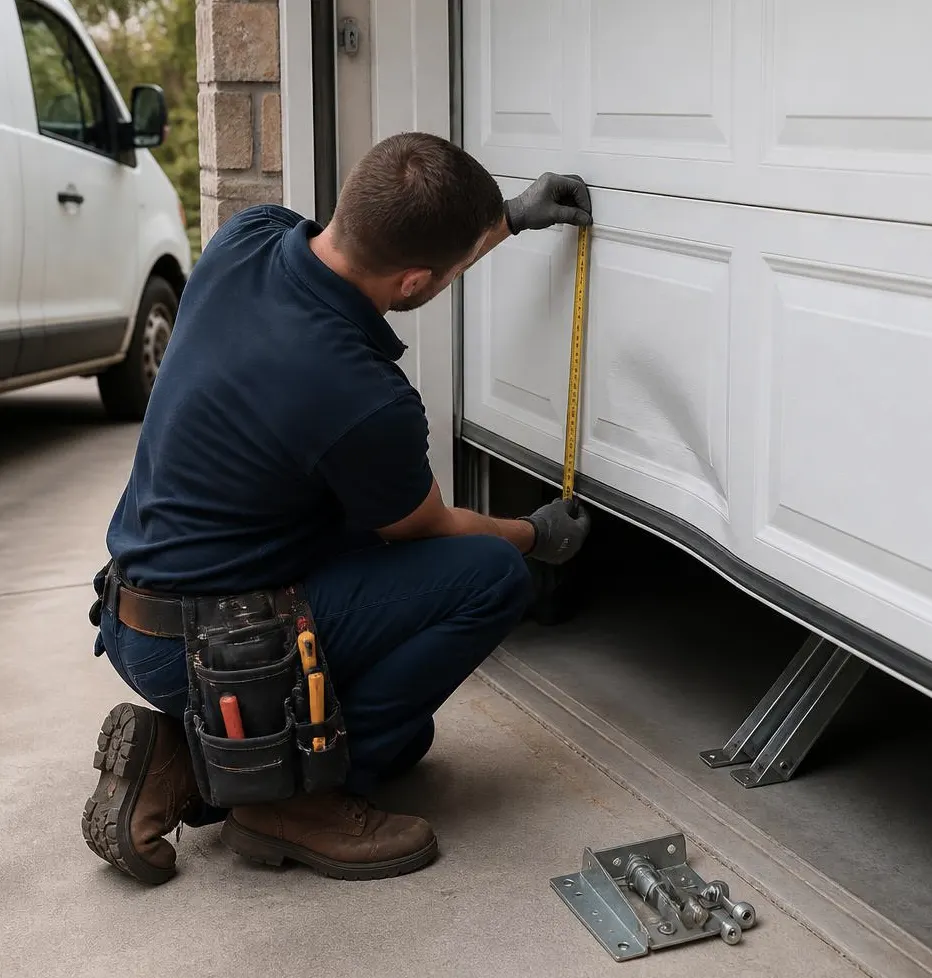
A garage door that's making an odd noise this month is usually still fixable with a lubricant bottle, a wrench, or a $20 roller. Leave it through another season of humidity swings and hurricane-season downpours, and that same noise tends to turn into a seized track, a stripped opener gear, or a torsion spring that lets go while the door is halfway down. The repair bill goes from double digits to several hundred dollars, and in the worst case, someone gets hurt. The sound itself is diagnostic information — here's what each one is telling you, and the order a technician actually checks things.
Grinding
Grinding is a metal-on-metal sound that shows up while the door is moving, not when it's sitting still. It's one of the more serious noises because it almost always means two parts that shouldn't be touching are touching.
- Dry rollers and tracks: checked first because it's the cheapest and most common cause. Months of humidity can wash lubricant out faster than you'd expect. Fix: clean the tracks and apply a silicone or lithium-based garage door lubricant — never WD-40, which attracts grit.
- Worn or flat-spotted rollers: steel rollers that have worn down grind as they travel. Fix: replace with nylon rollers, which run quieter and hold up better against moisture-driven corrosion.
- A bent or misaligned track: rollers forced against a warped track grind continuously. Fix: the track gets loosened, re-squared, and re-bolted; badly bent sections are replaced.
- A stripped opener gear: if the grinding is coming from the motor unit itself, the internal drive gear — often plastic — may be worn out. Fix: gear kit replacement inside the opener housing.
Squealing
Squealing is higher-pitched and usually happens at specific points in the door's travel rather than the whole way.
- Dry hinges and pivot points: first check, same fix as above — lubrication at every hinge, not just the rollers.
- Worn roller bearings: rollers with failing internal bearings squeal under load even when lubricated. Fix: roller replacement.
- A torsion spring needing lubrication: the coils rub against each other as the spring winds and unwinds. Fix: a light coat of spring-specific lubricant, applied carefully and never by anyone other than someone comfortable working near a loaded spring.
- Worn spring bearing plates: the small plates the spring shaft rotates through, mounted above the door. Fix: bearing plate replacement, done alongside spring service since it requires the same tension release.
Popping
Popping is sudden and usually happens once per cycle — as the door starts moving, finishes closing, or passes a certain point.
- Loose track brackets: checked first since it's quick to confirm — a visual inspection of where the track bolts to the wall. Fix: re-tighten or replace bolts and shims.
- Spring coils settling under tension: a quiet pop as the spring shifts slightly is often normal. Fix: none needed if it's a single soft sound with no other symptoms.
- A loud, sharp pop from the spring itself: this can mean metal fatigue setting in before a full break. Fix: the spring gets inspected for stress marks or uneven coil spacing and replaced before it fails completely.
- Panel flexing from humidity swelling: wood-composite doors especially can swell during wet stretches and pop as panels shift against the frame. Fix: hardware adjustment and, if swelling is advanced, panel or seal replacement.
Rattling
Rattling is a looser, ongoing vibration — often most noticeable during wind gusts or storm fronts moving through.
- Loose hardware: first stop — nuts, bolts, and hinge screws work loose over time, especially with the vibration from regular door cycling and wind load during storm season. Fix: every fastener gets re-torqued.
- Loose or worn rollers in the track: rollers with play rattle as the door travels. Fix: replacement.
- A loose chain or belt on a chain/belt-drive opener: slack in the drive mechanism rattles with every open and close. Fix: tension adjustment at the opener rail.
- A weak or loose reinforcement strut: horizontal struts that stiffen the door against wind pressure can work loose and buzz during gusty, hurricane-season weather. Fix: re-securing or upgrading struts to match local wind-load expectations.
Why This Matters More Right Now
Marshall County's shift into cooler, wetter weather brings exactly the conditions that loosen hardware and swell wood and composite panels — afternoon downpours, humidity swings, and the occasional storm system with real wind behind it. A door that's already making noise has less margin left before one of these causes turns into a stuck door or a snapped spring at an inconvenient moment, like during a storm when you need the car out.
When to Call Guntersville Garage Door Co
If the noise is new, getting louder, or paired with the door moving unevenly, it's worth having it looked at rather than guessing. Our Garage Door Maintenance visits cover lubrication, hardware torque checks, and roller and track inspection — the kind of upkeep that catches grinding and rattling causes before they spread. If the sound points to a spring — loud pops, visible gaps in the coils, or a door that feels heavier than it should — our Spring Replacement service handles it safely, since torsion springs carry serious stored tension and aren't a DIY job.
If your garage door in Guntersville, Albertville, Arab, Boaz, Scottsboro, Grant, or anywhere else in Marshall County has started making a noise you can't explain, give Guntersville Garage Door Co a call before the next round of storms puts it to the test.